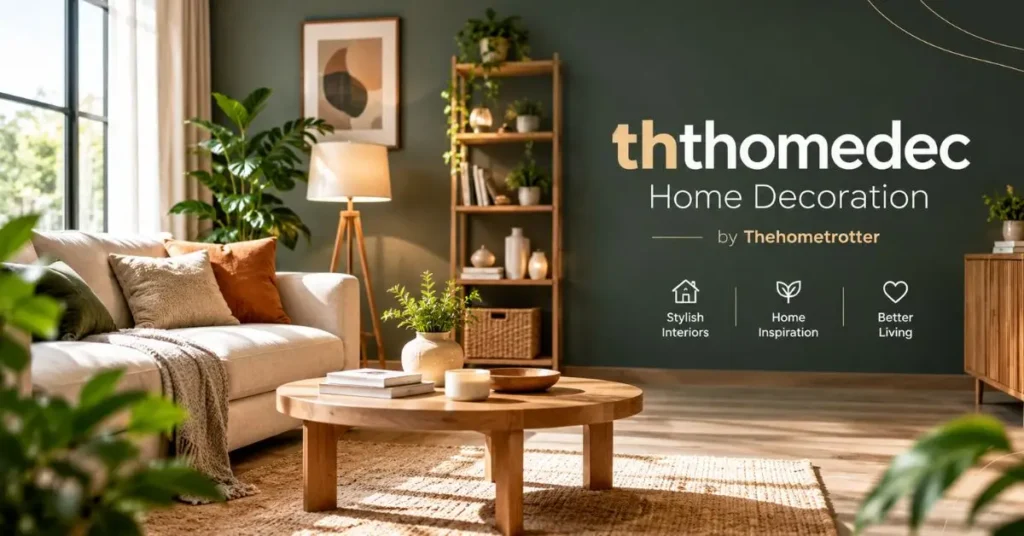

ththomedec Home Decoration by Thehometrotter Guide
Walking into a home that feels cold, cluttered, or unfinished can drain your energy at the end of a long day. Many people want a beautiful, inviting space, but they get stuck because professional interior design services are expensive and catalog photos feel impossible to recreate in real life.
Your home should be a comfortable sanctuary where you can truly relax and enjoy time with family and friends. You do not need a huge budget or a massive house to create an intentional, stylish environment.
ththomedec home decoration by thehometrotter refers to a practical, budget-friendly approach to interior design and home styling that focuses on warmth, everyday functionality, and balanced aesthetics. It combines accessible DIY projects, neutral color palettes, layered lighting, and intentional furniture layouts to transform ordinary living spaces into cozy, character-filled homes without requiring major renovations or expensive luxury furnishings.
In this comprehensive guide, you will discover step-by-step decorating techniques for every room in your home. You will learn how to choose the right colors, layer textures, pick functional lighting, and decorate with confidence on a realistic budget.
Quick Summary
Focus on function and comfort before buying new accessories. Use warm neutral tones as your base, layer your lighting with 2700K bulbs, and mix natural textures like wood, linen, and ceramic. Work on one room at a time to keep your budget under control and avoid half-finished projects.
The Core Foundations of Practical Home Decorating
Great interior design is not about copying every passing trend you see on social media. It is about creating a space that supports your daily routines while looking cohesive and welcoming.
When exploring ththomedec home decoration by thehometrotter concepts, the primary principle is always livability. A living room with delicate decor that you are afraid to touch is not a successful room. True style blends durability with beauty.
To build a solid foundation in any room, keep three core rules in mind:
- Flow and Clearance: Ensure walking paths are at least 30 to 36 inches wide so moving between rooms feels effortless.
- Visual Balance: Distribute visual weight evenly across the room rather than clustering all large, heavy furniture pieces on one side.
- Intentional Editing: Leave empty space on shelves and tabletops to give your eyes a place to rest and prevent visual clutter.
Living Room Styling: Creating a Cozy Gathering Hub
The living room is usually the most visible space in any house. It is where you entertain guests, watch movies, and unwind after work. Because this space handles multiple activities, the decoration should feel balanced and durable.
Choose the Right Rug Dimensions
An undersized area rug is one of the most common decorating errors. A small rug makes the entire room appear disjointed and cramped. Aim for a rug large enough that at least the front legs of your sofa and accent chairs rest firmly on it. In most average living rooms, an 8×10 foot or 9×12 foot rug creates the right visual anchor.
Build Layers of Warm Light
Never depend on a single bright overhead ceiling fixture. Overhead light creates harsh downward shadows and makes living spaces feel like sterile offices. Instead, set up three layers of light:
- Ambient Light: Soft recessed fixtures or ceiling lights controlled by a dimmer switch.
- Task Light: An adjustable floor reading lamp placed next to an armchair.
- Accent Light: Small ceramic table lamps on side tables and warm LED strip lighting tucked behind media consoles.
Always choose warm LED bulbs between 2700K and 3000K to give your living room a welcoming glow.
Textile and Pillow Formulas
You do not need to replace your couch to give your living room a fresh look. Upgrading your throw pillows and blankets makes a huge visual difference. When arranging cushions, follow a simple three-pillow formula:
- One large solid-color pillow in a rich texture like velvet or bouclé.
- One medium pillow featuring a classic geometric or stripe pattern.
- One small lumbar pillow in an organic print or complementary accent shade.
Following these simple ththomedec home decoration by thehometrotter living room techniques helps you build a space that feels curated, comfortable, and ready for everyday use.
Kitchen and Dining Room Accents
Kitchens and dining areas are working zones, but they still deserve thoughtful design choices. Because full kitchen renovations cost thousands of dollars, making smaller decorative adjustments delivers the best return on your investment.
Refresh Cabinet Hardware
Upgrading your cabinet knobs and drawer pulls is one of the fastest ways to modernize a kitchen. Swapping out worn silver or dated shiny brass pulls for matte black or brushed brass hardware gives your cabinets an instant lift. A set of twenty quality metal handles typically costs between $30 and $60 and can be installed in an hour with a basic screwdriver.
Style Kitchen Counters with Useful Items
Avoid covering kitchen counters with non-functional knick-knacks that get in the way of meal prep. Instead, decorate with beautiful everyday essentials. Group an olive oil cruet, a salt cellar, and a pepper mill on a round wooden board next to your stove. Add a small potted herb like rosemary or basil on the windowsill to bring fresh color into the room.
Dining Table Centerpieces
Keep your dining table decor simple and low so guests can hold conversations across the table without leaning around tall floral arrangements. A wide, shallow wooden dough bowl or a trio of brass taper candlesticks looks refined and takes only seconds to move aside when serving food.
Bedroom Decor: Designing a Restful Retreat
Your bedroom should be the quietest and most relaxing room in your home. The goal here is to reduce visual stimulation and create an environment that supports quality sleep.
Applying ththomedec home decoration by thehometrotter strategies in the bedroom means prioritizing soft materials, gentle color palettes, and clutter-free surfaces.
Layer Bedding for Texture and Depth
To make your bed look inviting, build layers of breathable natural fabrics:
- Start with crisp white or cream percale cotton sheets for a clean foundation.
- Add a medium-weight duvet with a fluffy down-alternative insert.
- Fold a waffle-weave blanket or linen quilt across the bottom of the mattress.
- Top with two sleeping pillows and two matching decorative sham cushions.
This layered setup adds visual richness and allows you to adjust your bedding easily as room temperatures change throughout the year.
High and Wide Window Curtains
Make your bedroom feel larger and more open by hanging your curtain rods high and wide. Mount the rod 4 to 6 inches above the window frame, close to the ceiling line, and extend the brackets 6 to 8 inches past the window sides. This draws the eye upward, creates the impression of taller walls, and allows natural daylight to flood the room when the curtains are drawn open.
Decorating Small Spaces and Entryways
Tight hallways, compact powder rooms, and small entryways present unique styling challenges. The key to decorating small areas is choosing pieces that provide practical storage while maintaining clean sightlines.
In an entryway:
- Mount a floating wooden shelf to hold mail and keys without taking up floor area.
- Hang a large round wall mirror above the shelf to reflect natural light and make the entryway feel twice as wide.
- Place a low woven basket underneath to keep shoes off the floor.
In small bathrooms:
- Swap plastic soap bottles for glass pump dispensers.
- Roll clean hand towels and place them in a small wire basket on the back of the toilet tank.
- Hang a single piece of framed art to add personality to plain drywall.
Using smart ththomedec home decoration by thehometrotter ideas for small spaces ensures that every square foot of your floor plan looks intentional and tidy.
Color Harmony: The 60-30-10 Decorating Rule
Choosing colors can be intimidating. If you pick colors at random, a room can easily end up looking disjointed or chaotic. Using the classic 60-30-10 decorating rule takes the stress out of building a balanced color palette.
+--------------------------------------------------------------------+
| 60% Dominant Base: Walls, Area Rugs, Main Upholstery               |
| (Warm Cream, Soft Greige, Warm Oatmeal)                            |
| +----------------------------------------------------------------+ |
| | 30% Secondary Color: Curtains, Accent Chairs, Bedspreads        | |
| | (Muted Olive Green, Slate Navy, Soft Taupe)                    | |
| | +------------------------------------------------------------+ | |
| | | 10% Accent Pop: Throw Pillows, Vases, Artwork, Hardware    | | |
| | | (Terracotta, Warm Ochre, Brushed Brass)                    | | |
| +----------------------------------------------------------------+ |
+--------------------------------------------------------------------+- 60% Dominant Base Color: This is your main canvas. It covers your painted walls, large area rugs, and primary sofa. Soft neutrals like warm ivory, greige, or soft linen work best.
- 30% Secondary Color: This adds contrast and character. Use it in your window drapes, accent chairs, and painted interior doors. Good options include sage green, slate blue, or warm camel.
- 10% Accent Color: This brings vibrant pops of energy. Use it sparingly on decorative vases, throw pillows, framed art, and metallic hardware. Think rust red, mustard yellow, or burnished gold.
Following these precise proportions guarantees that your colors complement each other without competing for attention.
Home Decor Upgrades: Budget, Effort, and Impact
The table below outlines common decorating projects to help you decide where to focus your time and money for the best visual results.
| Home Decor Project | Estimated Cost | Time Needed | Visual Impact | Difficulty Level |
|---|---|---|---|---|
| Swapping Light Bulbs (2700K Warm) | $15 to $30 | 15 Minutes | Moderate | Very Easy |
| Painting Interior Doors or Trim | $40 to $80 | 3 to 5 Hours | High | Easy |
| Updating Kitchen Cabinet Hardware | $30 to $70 | 1 to 2 Hours | High | Easy |
| Installing Floating Entryway Shelves | $40 to $90 | 1 to 2 Hours | Moderate | Moderate |
| Hanging Large Gallery Frames | $50 to $120 | 2 Hours | High | Easy |
| Layering Rugs and New Pillows | $100 to $250 | 1 Hour | Very High | Very Easy |
Budget Decorating: Smart Thrifting and Upcycling
You do not need to purchase every item brand new from high-end decor retailers. In fact, combining vintage and secondhand finds with modern pieces gives a home much more warmth and individuality.
Thrifting for Unique Accents
Visit local charity shops, estate sales, and flea markets to find high-character pieces at low prices. Focus on finding items with good shapes and solid materials:
- Wooden picture frames: You can easily clean, stain, or paint older frames to match your modern art.
- Ceramic crocks and vases: Heavy stoneware brings authentic earthy texture to shelves and kitchen counters.
- Woven baskets: Secondhand wicker baskets are sturdy, easy to clean, and cost a fraction of retail prices.
Simple Furniture Upcycling
If you have an outdated wooden side table or a scratched dresser, do not throw it away. Lightly sand the surface and apply two coats of satin paint in a warm charcoal or soft olive shade. Finish the update by installing modern metal knobs. A project like this costs around $25 in materials and gives you a completely customized furniture piece for your living room or hallway.
Integrating thrifty ththomedec home decoration by thehometrotter concepts lets you design a distinctive home while keeping your spending well within your limits.
Common Decorating Mistakes to Avoid
Even with clear ideas, it is easy to make simple mistakes that make a space feel awkward or cluttered. Keep these helpful tips in mind:
Hanging Art Too High
A very common decorating mistake is hanging framed art too close to the ceiling. The center of any wall art or gallery collection should sit at standard eye level, which is 57 to 60 inches from the floor. If you are hanging a frame above a sofa or console table, leave 6 to 8 inches of space between the furniture top and the bottom of the frame.
Pushing All Furniture Against the Walls
Many people push every couch and chair flat against the walls in an effort to make a room feel bigger. This creates an awkward, cavernous gap in the center of the room. Pull your seating inward by several inches to create a cozy, functional conversation area.
Buying Matching Furniture Showroom Sets
Purchasing a complete matching set with an identical couch, loveseat, coffee table, and side tables makes a living room look like a retail showroom. Instead, mix different finishes. Pair a fabric sofa with a wooden coffee table and a metal floor lamp to create visual interest and depth.
Real-World Example: A Living Room Refresh in Charlotte, North Carolina
To see how these principles work in everyday life, look at a recent living room makeover in a suburban Charlotte, North Carolina home. The homeowner had a plain, builder-grade living room with cold lighting, bare beige walls, and cluttered flat surfaces.
Here is how the space was styled on a strict $450 total budget:
- Paint and Trim ($70): Painted the window trim and baseboards in a soft creamy white to add subtle contrast against the light greige walls.
- Lighting Upgrades ($85): Replaced two bright 5000K daylight ceiling bulbs with warm 2700K LED bulbs and added a brushed metal floor reading lamp beside the sofa.
- Rugs and Textiles ($195): Sourced an 8×10 foot flat-weave neutral wool-blend area rug and three textured pillow covers in rust, cream, and olive.
- Wall Art and Shelving ($100): Installed two floating wooden shelves on an empty wall and styled them with framed family photos and trailing pothos plants.
By focusing on lighting, textiles, and balanced wall decor, the room was transformed over a single weekend into an inviting, stylish space where the whole family loves spending time.
Using trusted ththomedec home decoration by thehometrotter techniques allowed the homeowner to complete the entire update without exceeding their budget.
Frequently Asked Questions
What are the easiest ways to decorate a home on a small budget?
The easiest budget-friendly updates include painting, changing cabinet hardware, rearranging furniture, and adding warm lighting. Affordable textiles and secondhand décor can also refresh a room without major costs.
How do I choose the right color palette for my home?
Use the 60-30-10 rule: 60% neutral colors, 30% secondary colors, and 10% accent colors. Test paint samples in different lighting before choosing your final colors.
How can I make a small room feel larger?
Use mirrors, light colors, high-mounted curtains, and furniture with exposed legs to make a small room feel more spacious. Keep walkways clear and avoid oversized furniture.
How do I mix different wood tones in the same room?
Choose one dominant wood tone and balance it with one or two complementary finishes. Repeating each wood tone at least twice helps the room look coordinated.
Why is lighting important in home decoration?
Lighting affects a room’s mood, colors, and overall appearance. Layering ceiling, floor, table, and accent lighting creates a warmer and more balanced space.