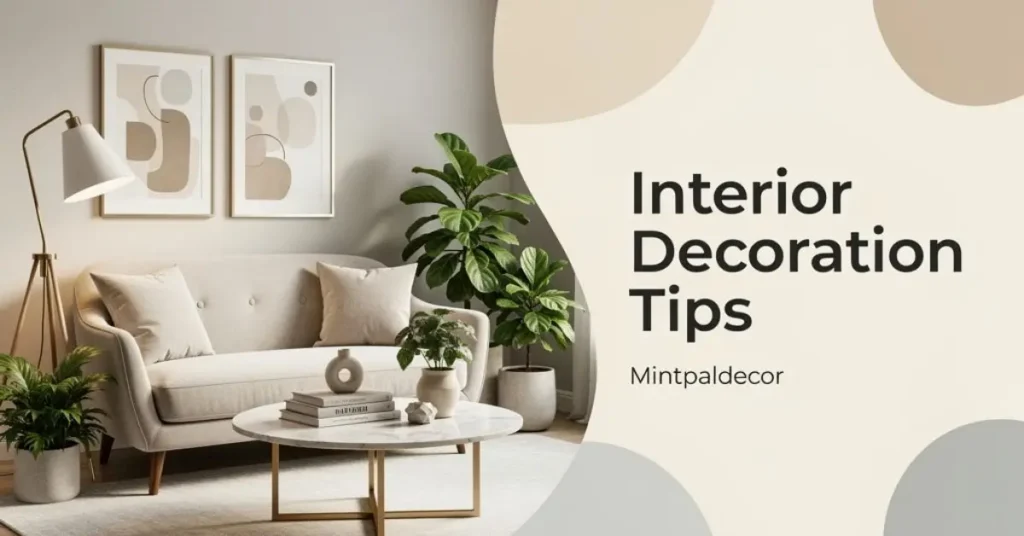

Interior Decoration Tips
Interior decoration is one of those topics where there is no shortage of advice but a significant shortage of advice that is actually useful. Most decoration content either stays at a vague inspirational level or jumps straight to expensive renovation territory, leaving homeowners who want practical, specific guidance with little to act on.
The gap between a home that looks good and one that feels unfinished or random is almost never about budget. It is about understanding why certain choices produce visual improvement and applying those principles consistently. A few hundred dollars spent correctly transforms a room more effectively than a few thousand spent without that understanding.
This guide covers interior decoration tips mintpaldecor principles that work across different room types, budgets, and home styles. What makes decoration effective, which specific changes produce the most visible results, and how to approach each room with a clear framework rather than a collection of individual purchase decisions.
What Are Interior Decoration Tips?
Interior decoration tips mintpaldecor refers to practical, principle-based guidance on improving the visual quality and atmosphere of indoor living spaces through intentional choices about color, furniture, lighting, textiles, and accessories. Effective interior decoration advice goes beyond telling you what to buy by explaining why certain changes work, how elements interact visually, and how to make decisions that suit your specific space rather than replicating images from design publications that may not translate to your actual home.
Quick Summary
Effective interior decoration follows consistent principles. Use warm neutral base colors, choose correctly scaled furniture, layer lighting sources, hang curtains high and wide, and build in natural texture through plants and wood tones. This guide covers these principles with specific room-by-room tips and honest US budget context throughout.
Why Most Decoration Attempts Fall Short
Understanding what goes wrong with typical decoration attempts helps avoid the same mistakes.
The most common problem is buying individual attractive pieces without a clear visual framework connecting them. A beautiful lamp, a striking throw pillow, and an interesting wall print can each be genuinely lovely without doing anything useful for the room they are placed in if they are not working together toward a coherent visual direction.
The second most common problem is ignoring the foundational elements. Lighting quality, furniture scale, and curtain height have more visual impact than any accessory or artwork. When these are wrong, no amount of decorative layering resolves the fundamental feeling that something is off.
Interior decoration tips mintpaldecor guidance consistently addresses foundations before accessories because getting the foundations right makes everything else easier and more effective.
The Principles That Underpin All Good Interior Decoration
Warm neutral base with layered texture
The most durable interior decoration approach builds from a warm neutral foundation. Walls, large furniture pieces, and flooring in soft whites, warm creams, greige, or light taupe with warm undertones create backgrounds that work with almost any accent color and that age well as preferences change.
Texture is what keeps warm neutrals from feeling bland. A linen sofa, a wool rug, a wooden coffee table with visible grain, cotton cushions in slightly varied neutral tones, all read as neutral in terms of color while creating visual richness through material contrast.
This approach consistently performs better in real homes than bold color choices because it creates flexibility. Accent colors can change with seasons and moods without requiring foundational changes.
Correct furniture scale before anything else
Furniture that is correctly scaled to a room makes the space feel designed. Furniture that is too small makes it feel empty and accidental. Furniture that is too large makes it feel cramped and chaotic.
The most common scale mistake in US homes is choosing sofas, area rugs, and dining tables that are too small for their spaces. A standard 8×10 area rug in a large living room looks like a bath mat. A sofa that seats two in a room designed for six makes the room feel abandoned.
Measure every room before shopping for major pieces. Know your square footage and the dimensions of the furniture footprint you need. Then shop for those specific dimensions rather than what looks appealing on a showroom floor in a different context.
Layered lighting changes everything
Single overhead fixtures provide functional illumination and almost nothing else. They create flat, shadowless light that makes decoration look worse than it is.
Layered lighting involves multiple light sources at different heights: ceiling for ambient light, floor lamps for mid-height warmth, and table lamps for intimate surface illumination. Together, these create depth and atmosphere that transforms how decoration reads in a room.
Switching all bulbs to warm LED options in the 2700K to 3000K range produces the amber quality that makes rooms feel genuinely inviting. This costs almost nothing and is one of the most impactful interior decoration tips available at any budget level.
Living Room Decoration Tips
Start with the area rug
The rug defines the seating area and everything else in the living room arranges around it. Choose a rug large enough that the front legs of the sofa and chairs can sit on it. This connects the furniture to the rug visually. A rug that sits entirely in the center of the room without touching furniture looks like it was placed there as a placeholder.
Neutral tones with texture, wool, jute, or woven cotton, work best as they tie furniture together without competing with other decoration elements.
Create one clear focal point
Every living room needs a visual anchor. A fireplace, a large piece of artwork, or a significant media console all function as focal points. Every other decoration decision should support this anchor rather than create competing visual interest.
A common mistake is adding too many significant visual elements, a large plant in one corner, a gallery wall on one side, a bold rug pattern, and a statement sofa, all in the same room. Each element individually is fine. Together they create visual competition that makes the room feel restless.
Add plants for organic texture
A single large plant, a fiddle leaf fig, olive tree, or large monstera, creates more visual warmth than most decorative objects at the same price point. Plants introduce organic texture and color that photographs cannot replicate and that read as life and intentionality in a living space.
If low light prevents live plants, high-quality artificial alternatives in larger sizes work adequately in most interiors.
Bedroom Decoration Tips
Make the bed the clear focal point
In a bedroom, the bed is always the focal point. All other decoration decisions serve it. This means the headboard, bedding, and lighting should be prioritized above any other element in the room.
An upholstered headboard in a neutral fabric provides the right scale and softness for most bedrooms. Paired with quality linen or cotton bedding in white, cream, or stone, and a textured throw, this combination makes bedrooms feel both designed and genuinely comfortable.
Bedside lighting replaces overhead for evening use
A pendant or table lamp on each side of the bed eliminates the need for overhead lighting in the evening and creates the intimate atmosphere that makes bedrooms feel like genuine retreat spaces rather than just sleep rooms. This is one of the most consistently impactful interior decoration tips for bedrooms at any budget level.
One significant artwork above the bed
A single oversized piece of art hung slightly lower than center height above the headboard creates visual completion in a bedroom. The most common art hanging mistake is choosing pieces that are too small for the wall and hanging them too high. Go larger and hang lower than feels instinctive.
Kitchen and Dining Decoration Tips
Hardware as the highest return investment
Replacing dated cabinet and drawer hardware is the single highest return kitchen decoration investment available. Cost ranges from $60 to $400 depending on kitchen size and hardware selection. Matte black, brushed nickel, and brushed gold in clean simple profiles work across virtually all cabinet colors and styles.
Dining table lighting as the room’s focal point
A pendant or chandelier hung 30 to 36 inches above the dining table creates visual focus for the dining area and significantly improves the light quality for meals. This is the decoration element that most completely transforms a dining area from functional to intentionally designed.
Consistent display on open shelving
Open shelves in kitchens work when curated consistently. Ceramics in two or three colors maximum, grouped with cookbooks and a few practical items, look intentional. Mixed random objects that have accumulated over time look like storage. The discipline required to maintain curated open shelving is worth considering honestly before installing it.
Bathroom Decoration Tips
Consistent fixture finishes throughout
Replacing faucets, towel hardware, and hooks with pieces in a consistent finish is the bathroom equivalent of kitchen hardware replacement. Brushed gold, matte black, and brushed nickel all work well with most tile and vanity combinations. Mixing finishes creates visual noise in a small space where cohesion has an outsized effect.
Mirror upgrade with proper lighting
A framed or backlit mirror paired with side-mounted sconces dramatically improves both the appearance and the functional light quality of any bathroom. Single overhead bar lighting creates unflattering shadows. Side-mounted lighting eliminates these while adding a design element that makes bathrooms feel considered rather than builder-standard.
Textiles in a consistent palette
Towels, bath mats, and any fabric elements in a consistent two-color palette make small bathrooms feel coordinated. White and one accent tone is the most versatile approach. Rotate accent tones seasonally if variety is important without requiring permanent changes.
Interior Decoration Budget Reference
| Room | Low Budget | Mid Budget | Higher Investment |
|---|---|---|---|
| Living Room | $300–$700 | $1,200–$3,000 | $5,000+ |
| Bedroom | $200–$500 | $800–$2,000 | $4,000+ |
| Kitchen Decoration | $100–$400 | $500–$1,500 | $3,000+ |
| Bathroom | $150–$400 | $500–$1,200 | $2,500+ |
These ranges reflect decoration spending rather than renovation. Regional availability and sourcing choices significantly affect final costs.
Common Interior Decoration Mistakes
Hanging curtains at the window frame. This makes ceilings feel lower and windows feel smaller. Hang curtains close to the ceiling and well beyond the window frame on each side. The cost is identical but the visual result is dramatically better.
Choosing rugs that are too small. In living rooms, the rug should accommodate the seating arrangement. In dining rooms, the rug should extend well beyond the table to allow chairs to remain on the rug when pulled out for seating.
Ignoring lamp scale. Table lamps that are too small for the surface they sit on look like they were borrowed from another room. The lamp and its shade should be proportional to the table and the surrounding furniture.
Over-accessorizing. More objects do not create a more decorated room. They create a more cluttered one. Deliberate editing is as important as deliberate addition. Removing items is often more effective than adding more.
Conclusion
Interior decoration tips work best when they are grounded in understanding why certain choices produce visual improvement rather than just following a list of what to buy. Interior decoration tips mintpaldecor principles consistently point toward the same foundational decisions. Correct scale, warm neutral base, layered lighting, high-hung curtains, and deliberate editing are what make the difference between a room that feels designed and one that feels assembled.
Apply these principles in the sequence that makes sense for your specific situation. Address the foundational elements first. Layer in warmth and personality after the structure is right. Edit as consistently as you add. That approach produces interior decoration that you remain satisfied with rather than wanting to change again in a few months.
Frequently Asked Questions
What are the most important interior decoration tips?
Focus on proper furniture scale, layered lighting, high-hung curtains, and warm neutral colors.
How can I decorate my home on a small budget?
Use fresh paint, updated hardware, better lighting, and rearrange existing furniture.
What colors work best for interior decoration?
Warm neutrals like soft white, cream, and greige create a timeless foundation.
How can I make a room look professionally decorated?
Use balanced furniture placement, layered lighting, and a consistent color palette.
What is the best tip for decorating small rooms?
Hang curtains high, minimize clutter, and use mirrors to enhance space.
How do I choose artwork for my home?
Choose larger pieces and hang them at eye level for the best visual impact.