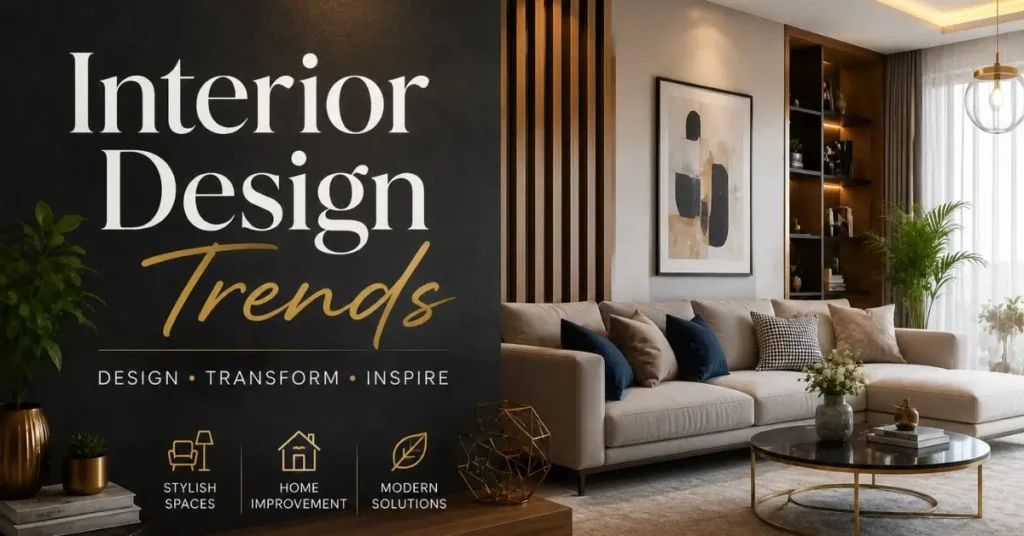

Walk into any home improvement store today and you’ll notice a shift. The cold, stark spaces that dominated design for years are giving way to something warmer, more textured, and more personal.
But with so many trends circulating online, it’s genuinely hard to know which ones are worth your time and money and which ones will look dated in two years.
This guide breaks down the interior design trends that are actually shaping homes in 2026. More importantly, it explains why each one works and how to bring it into your space without starting from scratch.
What Are Interior Design Trends?
Interior design trends are shifts in how people style, furnish, and color their living spaces over a given period. They reflect changes in lifestyle, technology, culture, and material availability. Good trends improve how a space functions and feels. The best ones have enough staying power to justify real investment — not just a seasonal refresh.
Quick Summary
The strongest interior design trends in 2026 favor warmth, natural materials, and functional beauty. These aren’t passing fads — they reflect a deeper shift in how people want to feel at home.
Why Trends Matter – But Shouldn’t Control You
Following every design trend is expensive and exhausting. Trends cycle fast, and what’s on magazine covers today can feel tired in three years.
The smarter approach is to understand which trends reflect genuine lifestyle shifts and which are just aesthetic moments. Trends rooted in how people actually live comfort, sustainability, flexibility tend to last. Trends driven purely by novelty usually don’t.
Use trends as a starting point, not a rulebook.
Warm Minimalism Is Replacing Cold Minimalism
The all-white, bare-surface minimalism of the 2010s is fading. What’s replacing it is warmer — still clean and uncluttered, but with texture, natural tones, and lived-in comfort.
Think warm whites, soft terracottas, honey-toned wood, and linen textiles instead of stark grey and polished concrete.
This shift makes sense. Cold minimalism looked great in photos but often felt uncomfortable to actually live in. Warm minimalism keeps the simplicity while adding the softness that makes a home feel inviting.
How to apply it: Swap cool grey tones for warm whites or soft beige. Introduce wood-toned furniture or accents. Add textured throw blankets or linen cushions. The goal is simple but not sterile.
Natural Materials Are Taking Center Stage
Stone, wood, rattan, clay, linen, wool — natural materials are everywhere in current home design, and for good reason.
They add texture and warmth that synthetic materials can’t replicate. They also age well, which makes them a smarter long-term investment than trend-driven synthetic finishes that look dated quickly.
In kitchens, this shows up as butcher block countertops and open wood shelving. In living rooms, it’s jute rugs, wooden coffee tables, and ceramic vases. In bathrooms, stone tiles and wood vanities are replacing the glossy white finishes of the previous decade.
Practical note: You don’t need to renovate to bring in natural materials. A rattan lamp, a stone soap dish, or a wooden tray costs very little but adds genuine texture to a space.
Biophilic Design Is Moving Mainstream
Biophilic design — the practice of connecting indoor spaces with nature — has moved from boutique hotels into everyday homes.
This goes beyond placing a few houseplants on a shelf. It includes maximizing natural light, using organic shapes in furniture and decor, incorporating water features, and choosing colors and textures that reflect the natural world.
Research consistently shows that spaces connected to nature reduce stress and improve wellbeing. Designers are responding to that evidence, not just following an aesthetic preference.
In practice: Start with light. Remove heavy window treatments that block natural light. Add plants — not just for aesthetics but for air quality. Choose furniture with organic, curved shapes rather than sharp-edged geometric pieces.
A homeowner in Portland, Oregon recently transformed a dark living room simply by removing blackout curtains, adding three large plants, and replacing a glass-and-metal coffee table with a round wooden one. The room felt entirely different without a single structural change.
Earthy, Saturated Color Palettes
Muted beige and greige (grey-beige) are giving way to richer earth tones deep terracotta, warm olive, rust, mustard, and burnt sienna.
These colors feel grounded and sophisticated. They work well with natural materials and add personality to spaces without feeling loud or trendy in a short-lived way.
The shift is partly a reaction to years of overly neutral interiors that felt safe but characterless. Homeowners are becoming more confident with color not neon or dramatic, but deep and warm.
How to use them: Paint one wall or a built-in bookcase in a warm, saturated tone. Use it as a backdrop for natural wood and textured textiles. You don’t need to commit the whole room a single surface can change the feel of a space significantly.
Multifunctional Spaces and Flexible Furniture
Remote work changed how people use their homes permanently. The home office, the exercise area, the guest room these now often need to exist within the same space.
This has pushed flexible, multifunctional furniture into the mainstream. Sofa beds that look like real sofas. Dining tables that double as workstations. Storage ottomans. Murphy beds built into shelving units.
The design challenge is making multifunctional spaces feel intentional rather than makeshift. The trend is moving toward purpose-built flexible furniture that looks polished, not improvised.
| Furniture Type | Primary Use | Secondary Use |
|---|---|---|
| Storage ottoman | Seating or footrest | Hidden storage |
| Extendable dining table | Everyday dining | Work or hosting |
| Murphy bed with shelving | Sleeping | Home office or lounge |
| Daybed | Lounge seating | Guest sleeping |
| Nesting tables | Side tables | Extra surface when needed |
Vintage and Secondhand Pieces Are In
Decorating with secondhand, antique, or vintage furniture is no longer a compromise it’s a deliberate design choice.
There are two reasons for this shift. First, sustainability concerns are pushing people away from fast furniture that breaks down in a few years. Second, vintage pieces add character and uniqueness that mass-produced furniture simply can’t replicate.
A single vintage armchair or antique mirror can anchor a room and give it a story. Mixing old and new is now one of the most respected approaches in current design.
Where to look: Facebook Marketplace, Craigslist, estate sales, and antique markets are all excellent sources. In most US cities, you can find high-quality vintage pieces for a fraction of retail furniture costs.
Statement Ceilings
Walls have been getting attention for years. Ceilings the “fifth wall” are finally getting their moment.
Painted ceilings in bold or contrasting colors, exposed wooden beams, decorative molding, and wallpapered ceilings are all growing in popularity. The ceiling is often the largest uninterrupted surface in a room, and leaving it plain white is increasingly seen as a missed opportunity.
Easiest entry point: Paint your ceiling a warm white that’s slightly warmer than your walls. This subtle contrast adds depth without drama. For a bolder move, use the same color as your accent wall but on the ceiling it creates an enveloping, cozy effect.
Quiet Luxury in Home Design
Quiet luxury understated, high-quality, intentional design is making a strong move from fashion into interiors.
It’s the opposite of maximalism or conspicuous displays. It favors quality over quantity, neutral palettes, fine materials, and exceptional craftsmanship over brand logos or obvious expense.
In practice, this means investing in fewer, better pieces. A well-made sofa in a neutral linen fabric. A solid wood dining table. Simple, quality hardware. Nothing shouts but everything feels considered.
This trend suits people who are tired of chasing the next thing and want a home that feels calm, enduring, and genuinely comfortable.
Sustainable and Low-Impact Design Choices
Sustainability in home design is shifting from a niche concern to a mainstream expectation.
This shows up in material choices, reclaimed wood, recycled glass, organic textiles but also in buying behavior. People are buying less, buying better, and choosing brands that are transparent about how products are made.
Energy-efficient lighting, non-toxic paints, and low-VOC finishes are also growing in demand. These aren’t just ethical choices they improve indoor air quality and often perform better over time.
Personal and Collected Interiors
Perhaps the strongest overall shift in current design thinking is this: spaces should reflect the person who lives in them not a trend or a catalog.
Highly curated, magazine-perfect rooms feel increasingly impersonal. People are gravitating toward spaces that include travel mementos, inherited furniture, personal art, and objects with actual meaning.
This doesn’t mean cluttered or undesigned. It means intentional. Every object has a reason to be there either it works, it means something, or it’s genuinely beautiful.
Conclusion
The most important thing about interior design trends is knowing how to use them — not just what they are.
Pick the ones that genuinely fit your life, your space, and your budget. Ignore the rest. A home designed around how you actually live will always feel better than one assembled from a trend checklist.
Frequently Asked Questions
What are the biggest interior design trends in 2026?
Warm minimalism, natural materials, biophilic design, and earthy color palettes are leading in 2026. They all share one theme warmth and comfort which is exactly how people want their homes to feel right now.
Which interior design trends have the most staying power?
Trends built around natural materials, function, and sustainability last the longest. They reflect real lifestyle values rather than short-lived aesthetic moments, so they rarely feel dated quickly.
How do I follow design trends without spending a lot?
Start with small updates like a new rug, cushions, a plant, or updated cabinet hardware. Secondhand shopping is also great for finding statement pieces at a fraction of the retail price.
Are open-plan living spaces still popular in 2026?
Yes, but with a shift. People still want open layouts but now prefer defined zones within them a clear reading corner, a work area, or a separated dining space rather than one large undivided room.
Should I decorate based on trends or personal style?
Personal style should always lead. Use trends as inspiration or a starting point, but never let them override what makes your home feel comfortable and meaningful to you.